
<- Back to Bathroom Refinishing

Chip and Crack Repair in Portland: Fix It Before It Spreads

Serving Portland and Vancouver since 1994. 100% Risk-Free Satisfaction Guarantee.

Portland's wet climate turns a small, easy-to-ignore bathtub chip into a real problem fast — moisture works its way under the finish, rust starts spreading under porcelain, fiberglass gets soft underneath, and homeowners in older neighborhoods (McLoughlin, Ardenwald, Island Station, Historic Downtown) often don't realize how many spots have already failed until they call us.

On top of that, DIY kits routinely fail because they treat every surface the same, when porcelain, fiberglass, and acrylic each need a completely different repair approach. Renew-It Refinishing solves this by diagnosing the material and the damage on-site during a free estimate, treating rust before it spreads, stabilizing cracks so they don't reopen, and matching the fix to the surface — most repairs done in a single visit, with a full refinish recommended honestly when spot repair won't hold up long-term.

"Jordan refinished our shower, made it look like new. Had him back to make our bathtub match. Very professional and nice young man." - Michael Strever

Chip vs. Crack: Why the Difference Changes Your Repair - Renew-It Refinishing

Chip vs. Crack: Why the Difference Changes Your Repair

People often use "chip" and "crack" interchangeably. But they are different, and knowing which one you have impacts how we fix it.

A chip is a small divot where a piece of the surface finish has broken away. You'll often see it on a bathtub's edge, around the drain, or on a countertop where something heavy landed. Beyond the cosmetic issue, a rough or broken edge on a wet surface is also a safety concern — NKBA's bathroom safety guidelines point to slip-resistant, intact surfaces as a basic safety standard. The base material underneath is usually fine; it's the coating that took the hit. Chips are common in Portland homes built during the 1950s and 1960s along the McLoughlin Boulevard corridor, where original porcelain tubs show their age.

A crack is different. It's a line running through the surface, sometimes reaching into the material itself. Cracks can be hairline or wide enough to catch your fingernail, and they spread. This spreading is the main concern. A crack left alone for a few months can let water seep underneath the finish. Once moisture gets trapped there, it can lead to rust, stain buildup, or a weakening of fiberglass structures.

Most of the time, when someone calls us about a "small crack," it turns out to be a chip. This is good news because chips are simpler to repair.

Here's how the repair approach differs:

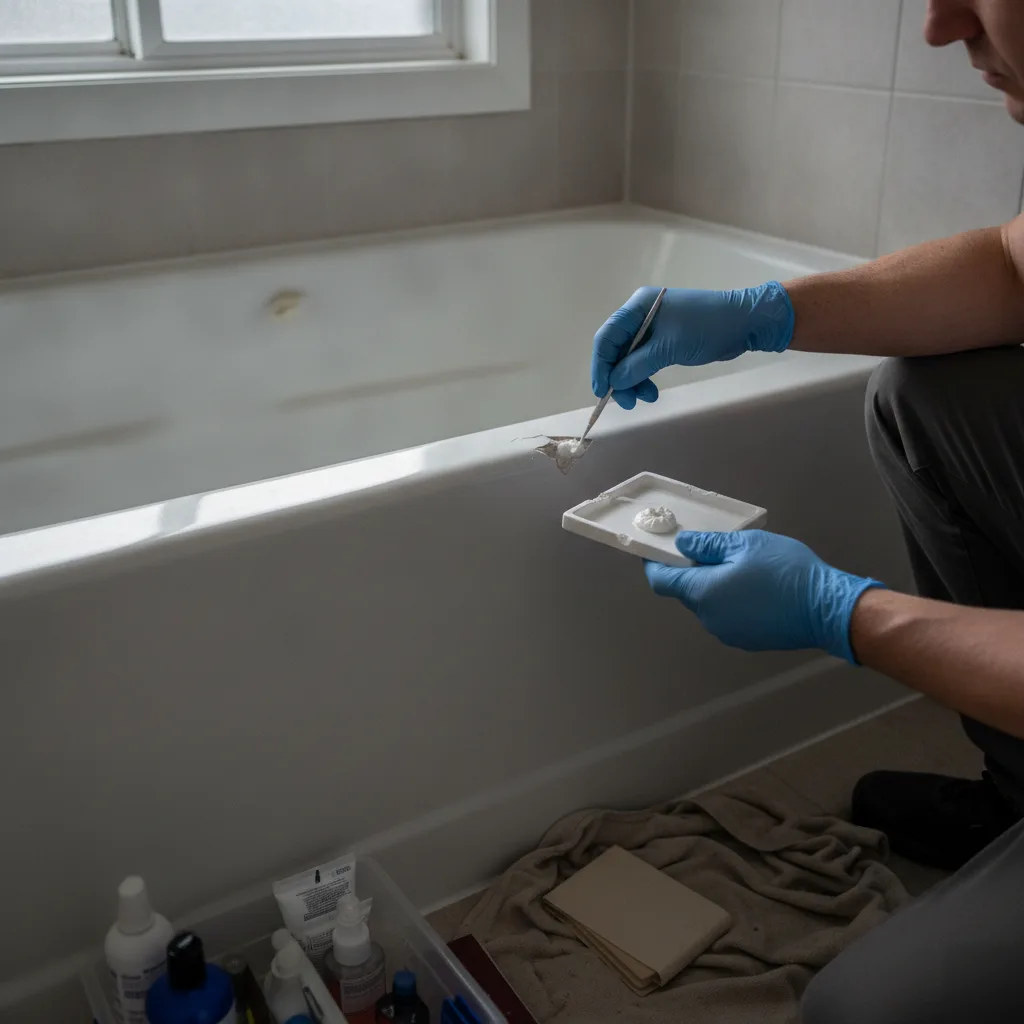
  • Chips get filled with a bonding compound matched to your fixture's color, then smoothed and sealed flush with the surrounding surface.
  • Cracks need stabilization first. We stop the crack from traveling before we fill and refinish over it.
  • Deep cracks in fiberglass may need reinforcement from the underside before any surface work begins.

Why does this distinction matter to you? A chip repair on a porcelain sink takes a fraction of the time and cost compared to stabilizing a crack that has spread across your shower floor for two years. The sooner you address either problem, the less involved the fix will be. We often see homeowners in the Historic Portland neighborhood wait because the damage "looks small," only to call us when water stains appear around the edges. By then, the job is often larger than it needed to be.

But both issues are fixable. Whether it's a single chip on your tub rim or a crack running along your shower base, we can restore the surface without any demolition.
Porcelain, Fiberglass, and Acrylic Each Need a Different Fix - Renew-It Refinishing

Porcelain, Fiberglass, and Acrylic Each Need a Different Fix

You might think a chip is just a chip, but it's not. The material of your tub or shower changes how we approach chip and crack repair. If we get it wrong, the fix won't hold. We often see this problem with DIY kits that treat every surface the same way. bathroom refinishing or just a targeted repair bathroom refinishing or just a targeted repair bathroom refinishing or just a targeted repair

Porcelain over cast iron is common in Portland's older Ardenwald and Island Station homes, many built before the 1960s. This porcelain layer is glass fused to metal. When it chips, moisture reaches the iron underneath, and rust starts fast. You can't simply fill it and walk away. We first clean out the rust, treat the exposed metal, and then build the repair in layers. This layering helps it bond correctly. If you skip the rust treatment, the whole patch lifts within months.

Fiberglass is different; it flexes. Cracks in fiberglass tubs and shower pans tend to spread if you don't stabilize them from behind. A surface-only patch on fiberglass is a band-aid. It will crack again the next time someone steps in. We reinforce the damaged area so the flex doesn't reopen the repair. That's how we ensure a fix lasts, rather than failing by next winter.

And acrylic? It's softer than porcelain but more rigid than fiberglass. Chips in acrylic usually have clean edges, making them easier to fill cleanly. Acrylic also reacts differently to bonding agents, so using the wrong product can leave you with a visible lump or a patch that yellows over time.

Most homeowners don't know what their tub is made of, and that's perfectly fine. We figure it out within the first few minutes of a free estimate. Knowing the material tells us which prep method, filler, and topcoat will give you a repair that blends in and holds up. Our technicians are drug-free and background-checked, so you can feel comfortable having us in your home. We'll walk you through both options on the spot if you're not sure whether your fixture needs bathroom refinishing or just a targeted repair, no pressure either way.

When a Spot Repair Won't Hold and Refinishing Makes More Sense - Renew-It Refinishing

When a Spot Repair Won't Hold and Refinishing Makes More Sense

Sometimes we get called out to a home, and a spot repair simply isn't going to work.

Homeowner examining a hairline crack in bathtub before calling Chip and Crack Repair
This isn't a sales pitch; it's simply the reality. If your tub or sink has one small chip, we can fix it, and you'll get years more life out of that surface. However, when we see a pattern of damage, the situation changes. Multiple chips clustered together, cracks branching out from a central point, or surfaces where old repairs have already started to yellow and lift, these are signs the fixture needs a full refinishing instead.

Here's what we look for. A single crack that runs more than three or four inches usually indicates stress in the underlying material. Fiberglass tubs in many Portland homes built during the 1970s and 1980s expansion along King Road and the Ardenwald area are especially prone to this. The flex in older fiberglass creates hairline cracks. These cracks keep coming back no matter how many times you patch them. Patching over old patches just builds up uneven layers that chip off faster.

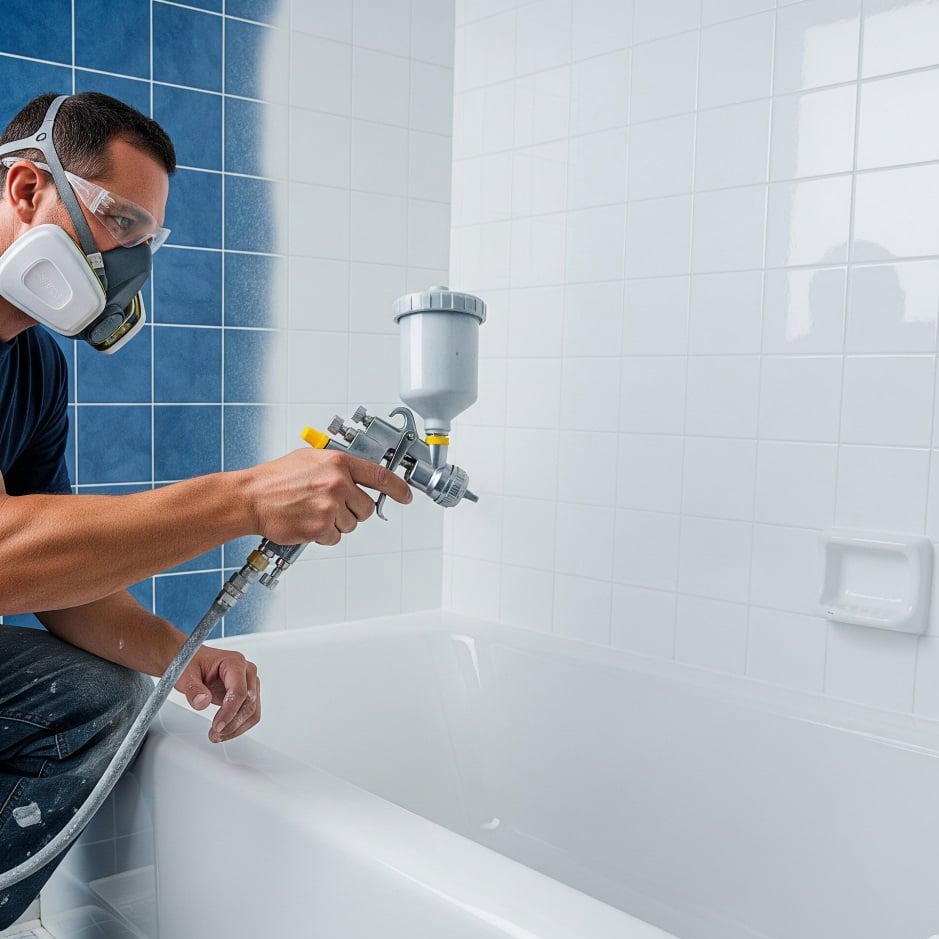
Refinishing covers the entire surface with a new bonded coating. It seals every flaw at once, so you won't be chasing individual spots every few months.

We see this every week. A homeowner calls about "just one crack," but when we get there, we often count six or seven spots they hadn't noticed yet. Tiny chips near the drain, stress cracks along the sidewall, staining that won't scrub out anymore, each one on its own seems minor, but together they tell us the surface is failing.

So how do you know which route is right? Ask yourself two questions. Is this the first chip you've noticed, or the third? Has the surface started feeling rough in places it used to be smooth? If you answer yes to both, a full bathtub or shower refinishing will give you a fresh surface that lasts far longer than simply stacking up spot fixes.

Not sure where your fixture falls? That's what our free estimate is for. We'll look at the damage in person and tell you plainly whether chip and crack repair will hold, or if refinishing is the smarter move. We've been doing this since 1994, and we'd rather give you the right fix once than the wrong fix twice.

Thinking about Chip and Crack Repair in Portland? Let's talk.

Inside a Chip and Crack Repair Visit in Portland - Renew-It Refinishing

Inside a Chip and Crack Repair Visit in Portland

You don't need to clear out your bathroom for a week. Most chip and crack repair visits in Portland are completed in a single appointment. Here's what happens when we show up.

First, we look at the damage. This means not just the chip you called about, but the entire surface. Hairline cracks can hide near drain fittings. Small chips often sit along the rim where bottles get knocked over. We check everything because fixing one spot while ignoring another doesn't make sense. In older Portland homes, especially the mid-century stock along neighborhoods near McLoughlin Boulevard, we often find multiple stress cracks from decades of use on original porcelain fixtures.

Once we know what we're dealing with, we clean and prep the damaged area down to the bare surface. This step matters more than people think. Any soap film, mineral buildup, or loose material left behind will prevent the repair from bonding correctly. We sand, clean with a bonding agent, and prepare the surface to accept the filler.

Then comes the actual repair work.

We fill chips and cracks with a professional-grade compound, carefully color-matched to your fixture. This isn't a generic white blob from a hardware store kit. We build the filler in thin layers, allowing each one to cure before adding the next. This creates a solid repair that sits flush with the surrounding surface. After the filler fully cures, we sand it smooth and apply a finish coat. This final step ensures the repaired area blends seamlessly with the rest of your tub or sink. Most of the time, people can't find the spot once we're done.

The whole process usually takes a couple of hours, depending on how many spots need attention. Because each technician on our team is drug-free and background-checked, you can feel comfortable having us in your home. We clean up after ourselves, walk you through what we did, and let you know when the surface is safe to use again.

If you've been staring at a chipped tub edge or a crack running across your shower floor, give us a call for a free estimate, it's probably a quicker fix than you'd expect.

Why Wet-Climate Chips Turn Into Bigger Cracks Fast

A small chip in your bathtub or sink might look harmless, but give it a few weeks in Portland's climate, and you'll see why it's not.

We get around 43 inches of rain a year here. That moisture doesn't just stay outside. Bathrooms in Portland homes hold humidity like a sponge, especially in older neighborhoods like Island Station where housing stock dates back to the mid-1900s and ventilation wasn't a design priority. Every shower you take pushes warm, wet air into every tiny opening on your fixture's surface. A chip the size of a pencil eraser, for example, becomes an open doorway for moisture.

Here's what happens. Water seeps beneath the finish through that small chip. It then sits against the substrate, whether that's cast iron, porcelain, or fiberglass. On cast iron tubs, rust starts forming almost immediately. On fiberglass, the moisture weakens the layers underneath and causes soft spots. The damage spreads outward from the original chip, and you won't see most of it because it's happening below the surface.

Then temperature swings make it worse.

Portland's winters hover around freezing at night but warm up during the day. That cycle causes materials to expand and contract. A chip that was a quarter inch in October can easily become a full crack by February. Most homeowners who call us with larger cracks tell us they noticed a small chip months ago but figured it could wait. In this climate, waiting rarely works.

And the longer water sits under a damaged finish, the harder the repair becomes. What starts as a quick chip and crack repair can turn into a much bigger job. This might involve rust and stain removal or even fiberglass hole repair. We've pulled back damaged areas on tubs in the Historic Downtown Portland district and found corrosion that had been quietly spreading for over a year, all from one ignored chip.

So if you've spotted a chip, don't wait for spring. The rain won't stop, the humidity won't drop, and that chip certainly won't heal itself. Getting a free estimate now can save you real money later.

Frequently Asked Questions

Common questions about Chip and Crack Repair in Portland

Most chip and crack repairs get scheduled within a few days of your call. We start with a free estimate to look at the damage and confirm the material. Small chips on porcelain or acrylic often get fixed in one visit. Cracks that need stabilization may take a bit longer, especially if we find rust or flex damage underneath. We'll give you a clear timeline before we start any work, so you know exactly what to expect.

Our technician checks the chip or crack up close and identifies the fixture material first. Porcelain, fiberglass, and acrylic each need different prep and filler, so this step matters. We also look for hidden problems, like rust under porcelain or extra cracks you may not have noticed. Our techs are drug-free and background-checked, so you can feel comfortable having them in your home. After the inspection, we explain your options clearly before any repair begins.

Homes built in Portland during the 1950s through 1980s often have porcelain or fiberglass fixtures that are showing their age. Along the McLoughlin Boulevard corridor, original porcelain tubs from the 1950s and 60s commonly develop chips at the edges. In the Ardenwald and King Road areas, fiberglass tubs from the 1970s and 80s tend to develop stress cracks from years of flexing. Knowing your home's era helps us guess what we'll find before we even arrive.

But even new homes get chips and cracks in their bathtubs. It is just the nature of these surfaces. Either way, we can repair your surface to make it look great again.

Yes, once the porcelain coating chips, the cast iron underneath can start rusting quickly. This is common in older Ardenwald and Island Station homes built before the 1960s. We clean out any rust, treat the exposed metal, and build the repair in layers so it bonds correctly. Skipping this step is why many DIY chip kits fail within months. Catching the chip early keeps the repair simple and stops rust from spreading further into the metal base.

You likely need a refinish if you notice several chips, spreading cracks, or old patches that are yellowing and lifting. One small chip on an otherwise solid surface usually just needs a targeted repair. But a crack longer than three or four inches often means the material underneath is stressed. We check the whole fixture during your estimate, since we often find extra spots homeowners haven't noticed yet.

DIY kits can look fine at first, but they often fail within a few months. Most kits treat every surface the same way, ignoring the differences between porcelain, fiberglass, and acrylic. Porcelain needs rust treatment before filling, and fiberglass needs support underneath so the crack does not reopen. Without the right prep, the patch usually lifts or discolors quickly. A professional repair matches the process to your specific fixture, so it holds up over time.

Your Bathtub Chip & Crack Repair Pros in Portland OR!

Call us today for a Free Consultation and Estimate to fix your damaged bathtub, shower, or sink.