<- Back to Bathroom Refinishing
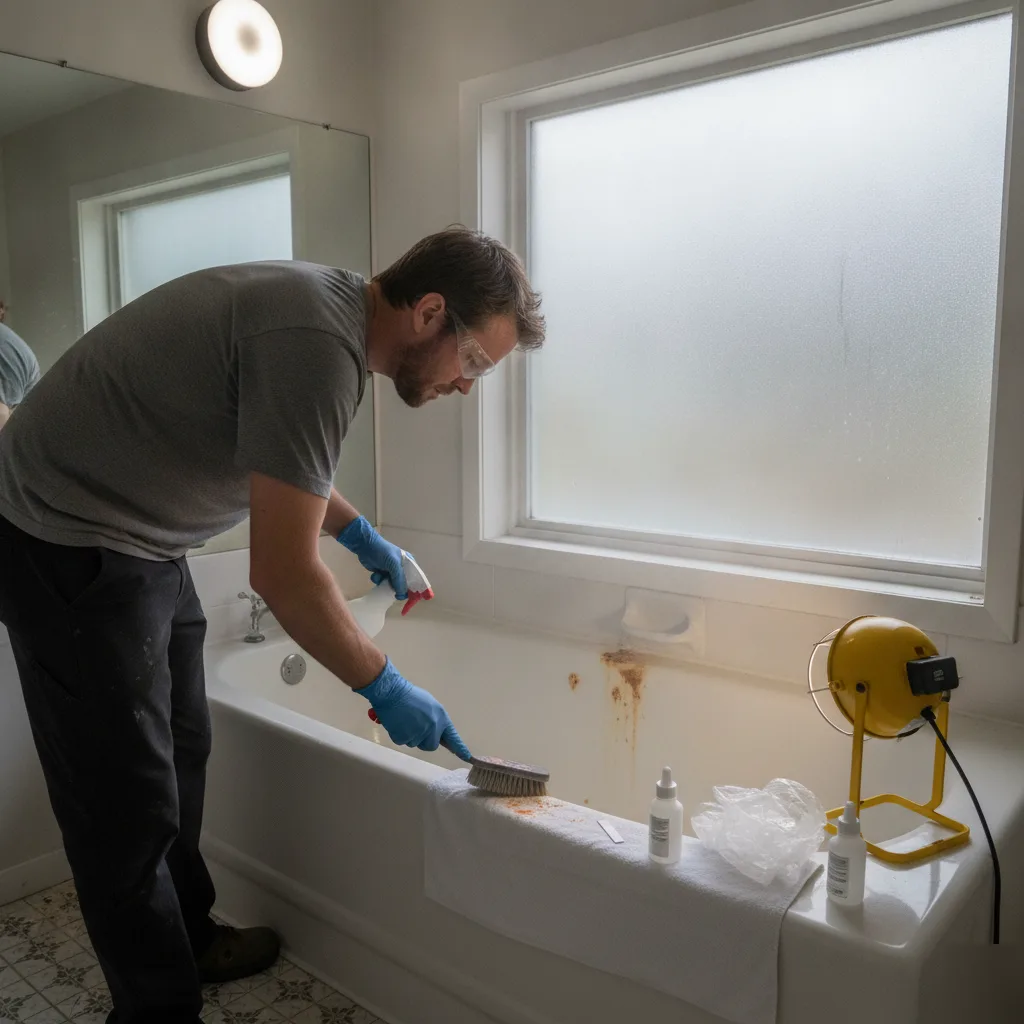
That stubborn orange-brown ring around the drain, streaks running down a fiberglass wall, or a stain that keeps coming back no matter how hard you scrub — these are the classic frustrations for Portland homeowners, especially in older neighborhoods like Ardenwald and Island Station where galvanized or cast iron plumbing sheds iron into the water for decades.
Scrubbing with steel wool or bleach-heavy cleaners often makes it worse, scratching the finish and inviting the rust right back. Worse, some stains aren't just cosmetic — rust can eat through to the substrate, leaving soft spots or flaking metal that no amount of surface treatment will fix.
Renew-It Refinishing solves this by first telling you plainly whether you're dealing with surface rust, mineral deposits, or real structural damage, then treating the actual chemical bond rust forms with the finish (not just masking it), repairing any pitted or compromised areas before refinishing, and walking homeowners through the simple habits — fixing leaks, using ventilation, avoiding metal accessories — that keep it from coming back.
That orange-brown streak near your bathtub drain might look like rust. But it might not be. The fix for each problem is totally different, so getting this wrong can cost you time and money.
True rust stains come from iron. Iron particles in your water supply react with oxygen and leave behind that familiar reddish-brown discoloration — EPA's drinking water guidance identifies iron corrosion as a known cause of fixture staining. In Portland, homes in the Ardenwald and Island Station neighborhoods often have older galvanized steel pipes that shed iron as they corrode from the inside out. The stain usually shows up right where water sits or drips - around the drain, below a leaky faucet, along the waterline of a tub that doesn't drain fast enough.
Mineral deposits look different. They're usually white, green, or pale yellow, sometimes chalky, sometimes hard and crusty. These come from calcium, magnesium, and lime in the water. They build up where water evaporates repeatedly - think shower doors, faucet bases, and the rim of your bathroom sink. Portland-area water is relatively soft compared to other regions, but that doesn't mean you're immune. We see mineral buildup constantly.
Here's why it matters. Rust stains penetrate the surface of porcelain and fiberglass and bond chemically with the finish. Scrubbing harder won't fix it. Harsh store-bought cleaners can strip the glaze right off your tub, leaving it rough and even more prone to future staining. Mineral deposits sit on top of the surface. They're stubborn, but they don't eat into the finish the same way.
A lot of homeowners call us saying they have "hard water stains" when what they're really dealing with is iron-based rust that's been setting in for months. The treatment approach we use for rust stain removal targets that chemical bond without damaging the underlying finish. For mineral deposits, the process is gentler.
Not sure which one you're dealing with? That's pretty common. A quick way to check at home: if the stain is reddish and concentrated near metal fixtures or drains, it's almost certainly rust. If it's white or greenish and spread across flat surfaces, you're looking at minerals. But when both show up together, and they often do, that's when professional rust stain removal makes the biggest difference.
Not every rust stain means your tub is falling apart. That's the first thing we tell homeowners, and it's usually true. Renew It Refinishing in Portland Renew It Refinishing in Portland
Surface rust is cosmetic. It sits on top of the finish. You'll see it as an orange or reddish-brown streak, usually near the drain or around the overflow plate. Hard water in Portland's older homes, especially in neighborhoods like Historic Portland where cast iron supply lines are still common, feeds these stains over months and years. The iron in the water oxidizes on contact with a worn finish. It looks awful, but the fixture underneath is perfectly solid.
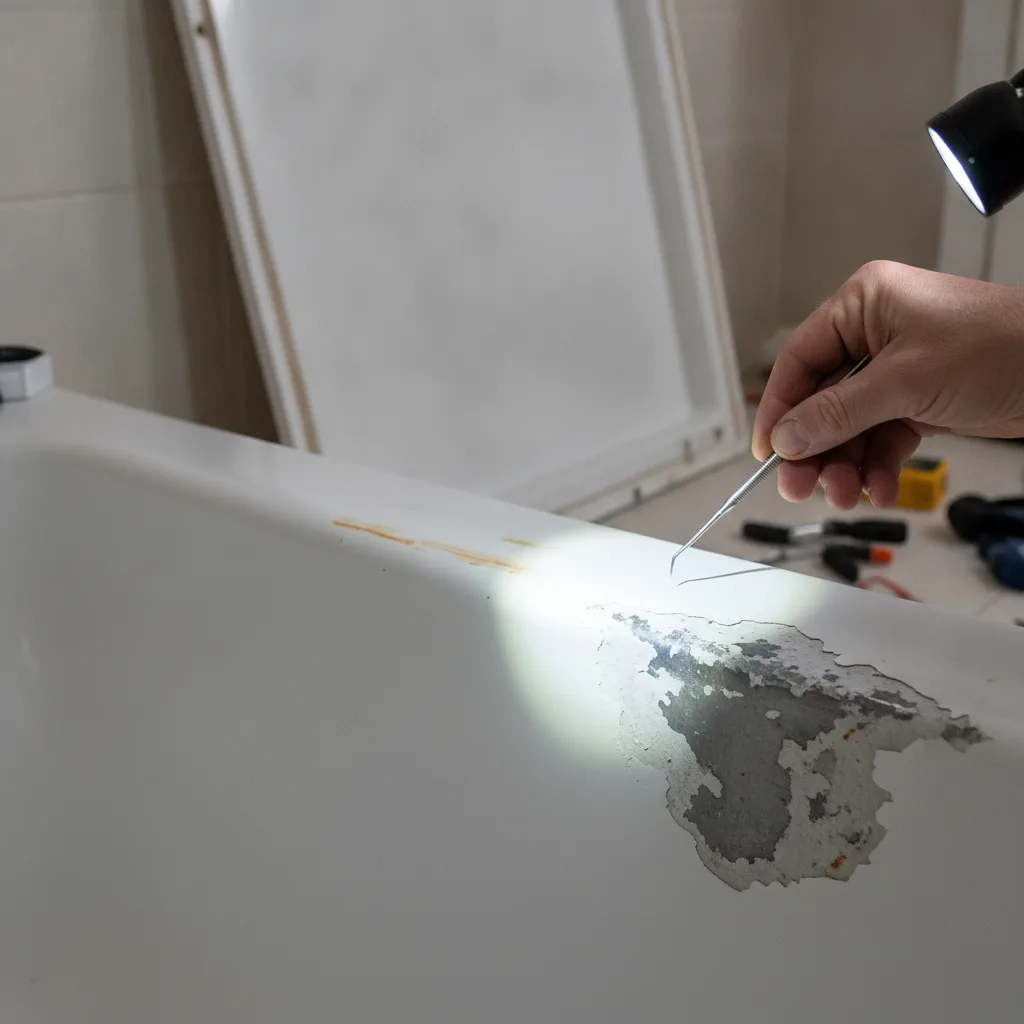
Structural damage is different. That's when rust has eaten through the actual substrate of the tub or sink. You might feel soft spots, see flaking metal, or notice the surface bowing slightly when you press on it. Sometimes there's a small hole. If water has been sitting against exposed metal for a long time, the damage goes deeper than any coating can fix on its own.
So how do you tell which one you're dealing with? Here's what we check during a free estimate:
Surface rust responds well to professional rust and stain removal followed by refinishing. The stain gets treated, the surface gets prepped, and a new finish bonds directly to the original fixture. But if the substrate is compromised, we'll tell you straight. A refinished coating won't hold over a hole or a weakened area without a proper repair first. We offer porcelain tub repair and fiberglass hole repair for exactly these situations, so the fix happens before the new finish goes on.
Catching surface rust early keeps it from becoming structural damage. A stain you ignore for a year can wear through a weakened finish and start corroding what's underneath. That's why we encourage folks to call as soon as they notice discoloration. We've been doing this work since 1994, and we've seen what happens when rust sits too long.
Here's the honest truth. Not every rust spot or stain needs a professional.
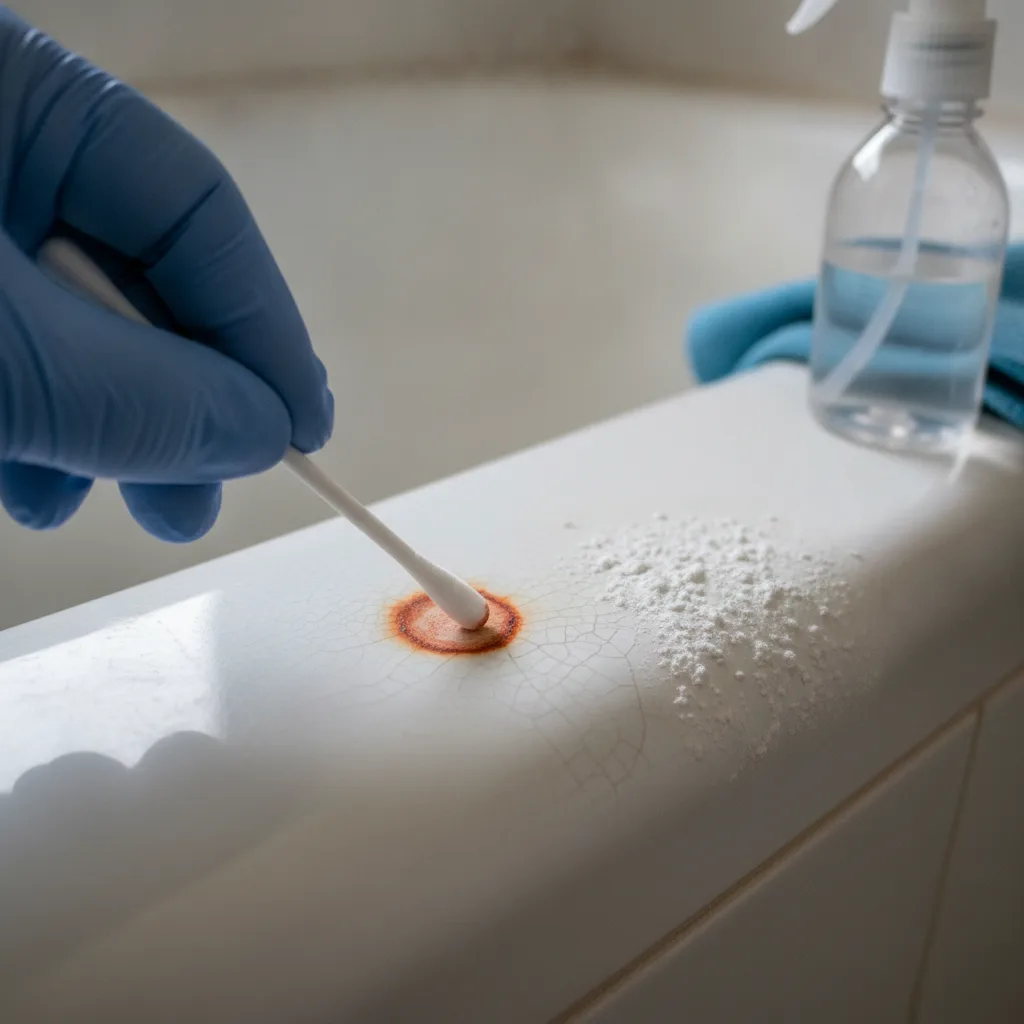
If you've got a faint orange ring around your bathtub drain, a product with oxalic acid will probably handle it. Same goes for light hard water marks on a porcelain sink that's still in good shape. Grab a non-abrasive cleaner, follow the directions, give it ten minutes to sit. Wipe it away. Done. You just saved yourself a phone call, we'd rather you know that upfront.
Surface-level stains respond well to store-bought cleaners when three things are true: the stain is recent, the finish underneath is still intact, and you're not scrubbing through the coating to reach it. A soft cloth and a mild acid-based cleaner can pull up mineral deposits that have only been sitting for a few weeks. Most hardware stores in Portland carry what you need. The key is catching it early.
But there's a line, and it's easy to cross without realizing it.
If you're reaching for abrasive pads or bleach-heavy products, you're probably doing more damage than the stain itself. We see this constantly. A homeowner scrubs at a rust spot with steel wool or a pumice stone, and now the original finish is scratched open. That scratch holds moisture. Moisture brings more rust. What started as a ten-minute cleanup becomes a repair job.
So when should you stop trying? Ask yourself these questions:
If you answered yes to any of those, the stain has gone past the surface and into the finish itself. No amount of scrubbing will fix that. Many older homes in Portland's Island Station neighborhood have original cast iron or porcelain fixtures from the 1940s and 50s, and those porous surfaces hold stains deep. At that point, you need someone who can prep and refinish the surface properly - not just clean over the problem. And if you're not sure where things stand, that's what a free estimate is for.
Need help with Rust & Stain Removal?
Most folks call us after they've already tried the store-bought stuff. The cream cleanser, the baking soda paste, maybe even a pumice stone. And the stain's still there. That's usually when we get the call.
Technician applying rust neutralizer to bathtub during professional service in Portland
Here's what happens when we show up. First, we look at the fixture closely. Not every rust stain is the same. A ring around a bathtub drain in a 1950s home near downtown Portland, where cast iron supply lines are still common, tells a different story than orange streaks running down a fiberglass shower wall. The source matters because it changes how we treat the surface.
We start by cleaning the area and identifying the stain type. Rust, mineral deposits, hard water scale, and dye transfer all look similar but respond to very different methods. Often what a homeowner thinks is permanent damage is a surface-level stain that hasn't been treated with the right process.
Once we know what we're dealing with, we apply professional-grade treatments that break down the stain without harming the underlying finish. This is the part most people get wrong on their own. Abrasive scrubbing or the wrong acid can etch porcelain and dull fiberglass. We match the treatment to the material, whether it's a porcelain tub, a bathroom sink, or a vanity top.
After the stain is lifted, we check the surface underneath. Sometimes rust has been sitting so long it's started to pit the finish. If that's the case, we can do chip and crack repair or refinishing to bring the fixture back to smooth, clean condition. But if the surface is intact, we're done. No extra work, no upsell.
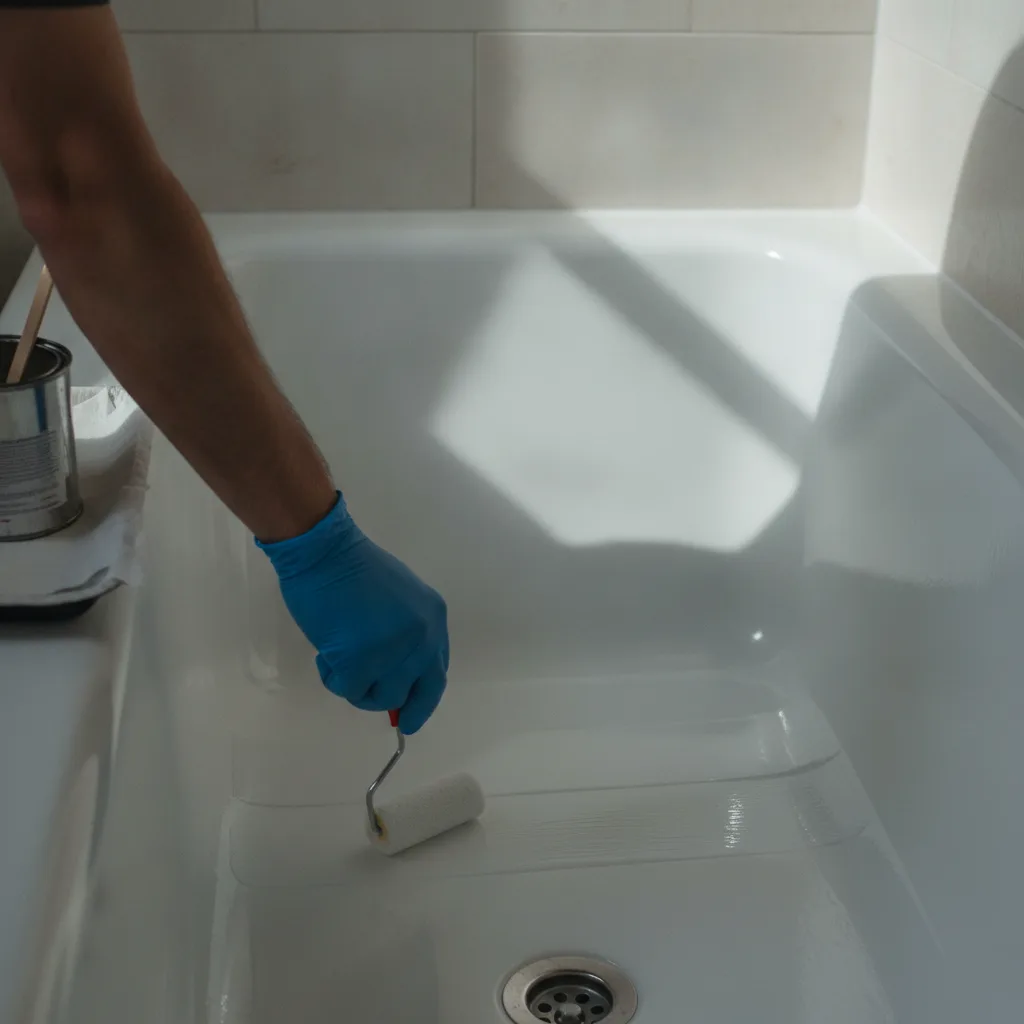
The whole process is fast. Most rust and stain removal jobs take a single visit. We've been doing this work since 1994, so we know what's fixable and what needs a bigger conversation. We'll tell you straight up during your free estimate. If you've been staring at that stain for months wondering if the tub is ruined - it's probably not.
You fixed the stain. The surface looks great. Now what?
This is the part most homeowners skip, and it's the reason we get repeat calls. Rust doesn't just appear once and quit. If the conditions that caused it are still there, it'll come back.
The biggest factor is moisture. Portland sits in the Willamette Valley, where annual rainfall averages over 40 inches and indoor humidity stays high for most of the year. That constant dampness speeds up oxidation on any exposed metal. Leaky faucets, slow drains, and dripping showerheads are the usual suspects. Fix those first. A single drip landing in the same spot will eat through a finish faster than anything else.
After that, it's about daily habits. Don't leave metal cans on the ledge of your tub or sink. Shaving cream cans, metal soap dishes, even bobby pins sitting in a puddle of water - all of them leave rust rings on refinished surfaces. We see this every week. Switch to plastic or ceramic accessories and you'll avoid the problem entirely.
Cleaning matters too, but not the way most people think. Harsh abrasive cleaners and scouring pads will scratch through the new coating. Those micro-scratches trap moisture and minerals right against the surface. Use a soft cloth with a non-abrasive bathroom cleaner instead. Wipe the fixture dry after each use if you can. That alone makes a huge difference.
Ventilation is the other piece. Older homes in neighborhoods like Historic Portland and Ardenwald often have small bathrooms with no exhaust fan or one that barely works. Trapped steam coats every surface with moisture for hours. A working vent fan that runs 15 minutes after your shower keeps humidity from settling into every corner of the room.
Here's the honest truth: a good refinishing job gives rust nothing to grab onto. But the coating can only do its part if you do yours. Keep metal objects off the surface, fix leaks fast, dry things down, move some air through the room. Simple steps. Real results. And if you're not sure whether your fixture needs professional attention, we're happy to take a look - the estimate is free, and the work comes with our 100% Satisfaction Guarantee.
We offer a free estimate to look at your rust stains before any work starts. During that visit, we check whether the stain is surface-level or if it has eaten into the tub's structure. Homes in Portland with older galvanized pipes, especially around Ardenwald and Island Station, tend to develop these stains faster than newer construction. Getting a quick look early means we can treat the stain before it turns into a bigger repair job.
We start by checking if the discoloration is rust or mineral buildup, since each one needs a different approach. We run a fingernail across the stain and tap around it to feel for soft spots or hollow areas underneath. If the surface is solid, we treat the stain and refinish it. If we find soft spots or flaking, we'll walk you through repair options before any new finish goes on top.
Older plumbing is the main reason. Homes in Historic Portland and Island Station often still have galvanized steel or cast iron supply lines that corrode from the inside as they age. Iron particles get released into the water and leave that reddish-brown streak near drains and faucets. This isn't a sign your home is falling apart. It's just a normal part of owning a house with older pipes, and it's very treatable once you know what you're dealing with.
Yes, if the stain is light and recent, a cleaner with oxalic acid or CLR usually does the job. Let it sit for about ten minutes on a faint stain, then wipe it away with a soft cloth. The trouble starts when people reach for steel wool or abrasive pads. That scratches the finish, holds moisture, and invites more rust to form. If a store-bought cleaner isn't cutting it after one or two tries, that's usually a sign to call a professional instead.
Be careful when using chemicals and never mix them with other materials. This can cause a dangerous chemical reaction.
Press on the stained area and feel for soft spots, flaking metal, or slight bowing in the surface. If it feels solid and smooth underneath the discoloration, you're likely dealing with cosmetic surface rust that responds well to treatment and refinishing. If you feel give in the material or notice a small hole, the rust has gone deeper than a coating can fix alone. In that case, the damaged area needs repair before any new finish is applied.
Stains can return if the source, usually older pipes, keeps releasing iron into your water. Professional treatment targets the chemical bond rust forms with your tub's finish, which lasts far longer than a store-bought fix. Homes with galvanized or cast iron supply lines, common in older Portland neighborhoods, may see new spots form over time simply because the plumbing keeps shedding iron. Catching new discoloration early, before it sets in, makes it much easier to treat again.
Call us today for a Free Consultation and Estimate to fix your damaged bathtub, shower, or sink.