<- Back to Kitchen Refinishing

Kitchen Countertop Repair Portland

Serving Portland and Vancouver since 1994. 100% Risk-Free Satisfaction Guarantee.

A chip by the sink or a burn mark near the stove doesn't have to mean a new countertop. Renew-It Refinishing repairs chips, hairline cracks, burns, gouges, and lifted edges on Portland kitchen counters, blending the fix so it matches the surface around it. You skip the cost, the mess, and the weeks without a working kitchen that come with replacement. We've done this work around Portland since 1994, the estimate is free, and every job is backed by our 100% Satisfaction Guarantee.

"An outstanding job reglazing our bathroom tile countertop. A total transformation! Extremely professional. The end result is beautiful. Love it." - Karen Norton

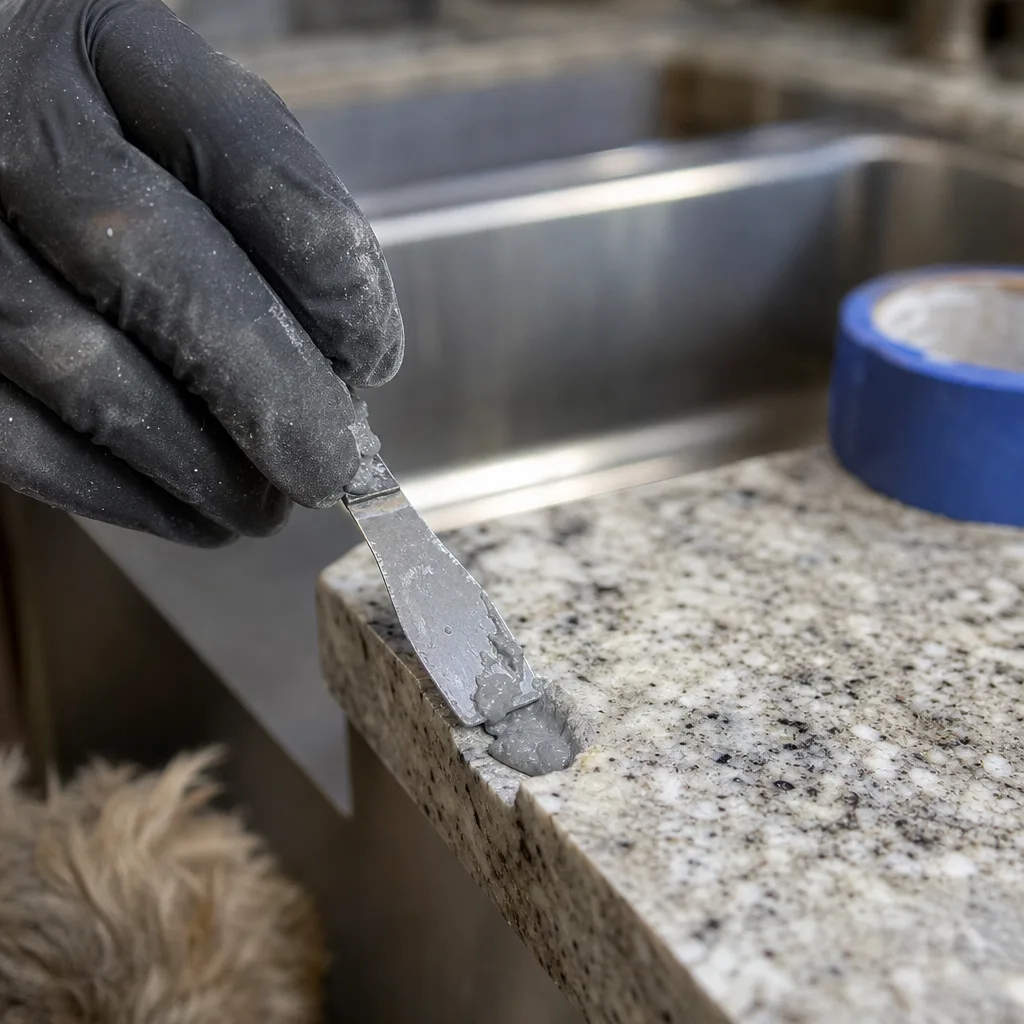
Close-up of epoxy repair compound applied to chipped granite countertop edge

Repair, Refinish, or Replace: How to Tell Which One You Need

If the damage is in one or two spots and the counter underneath is solid, a repair is usually all you need. If the whole surface looks worn or dated but is still sturdy, refinishing makes more sense. If the base is soft, swollen, or loose, no surface fix will last, and replacement is the honest answer.

Most people start by staring at one ugly spot and wondering if the whole counter has to go. Usually it doesn't. The trick is to look past the damage you notice first and check what's going on around it and under it.

A repair is the right fit when the problem is local. Picture a chip near the sink where a heavy pot slipped, or a small burn mark next to the stove. The rest of the counter looks fine, and it feels firm when you press on it. Fixing just that spot gets you back to a clean, even surface without touching anything else.

  • Repair: one or a few chips, small cracks, burn marks, or a lifted edge on a counter that's otherwise in good shape.
  • Refinish: the counter is sturdy, but the whole surface is dull, stained in lots of places, scratched all over, or a color you've been tired of for years.
  • Replace: the base is soft, swollen, sagging, or pulling away from the cabinets, or you want a different layout or shape.

Refinishing is for when the damage isn't really the problem. The problem is that the counter looks old everywhere. If you fix one chip on a faded, scratched surface, the new spot can stand out more than the old damage did. That's when it's worth covering the whole top. We handle that as its own service, Kitchen Countertop Refinishing, so you can read more about it there.

Here's where we'll tell you straight that a repair isn't the answer. If water has gotten under a laminate top and the board beneath it has puffed up or gone soft, a surface fix won't hold. The same goes for a counter that rocks, sags in the middle, or has a crack running all the way through. Those are problems with what's holding the counter up, and they need to be dealt with before any finish work makes sense. Sometimes that means a new countertop, and that's okay.

You might not need anyone at all, either. Light surface scratches and everyday stains often come up with a gentle cleaner and a soft cloth. Give that a try first. If the mark is still there after a careful cleaning, or if you can feel a dip or edge with your fingertip, that's when a repair is worth it.

Tile counters are their own case. If the tiles are solid and the grout is the part that looks bad, cleaning or regrouting may be all it takes, and our Grout Cleaning and Repair service covers that.

Still not sure which bucket you're in? That's normal. It's hard to judge your own counter when you look at it every day. Our free estimate lets us look at the surface and the base together and tell you plainly what will last. Every job is backed by our 100% Zero-Risk Satisfaction Guarantee, so you're never stuck with a fix you aren't happy with.
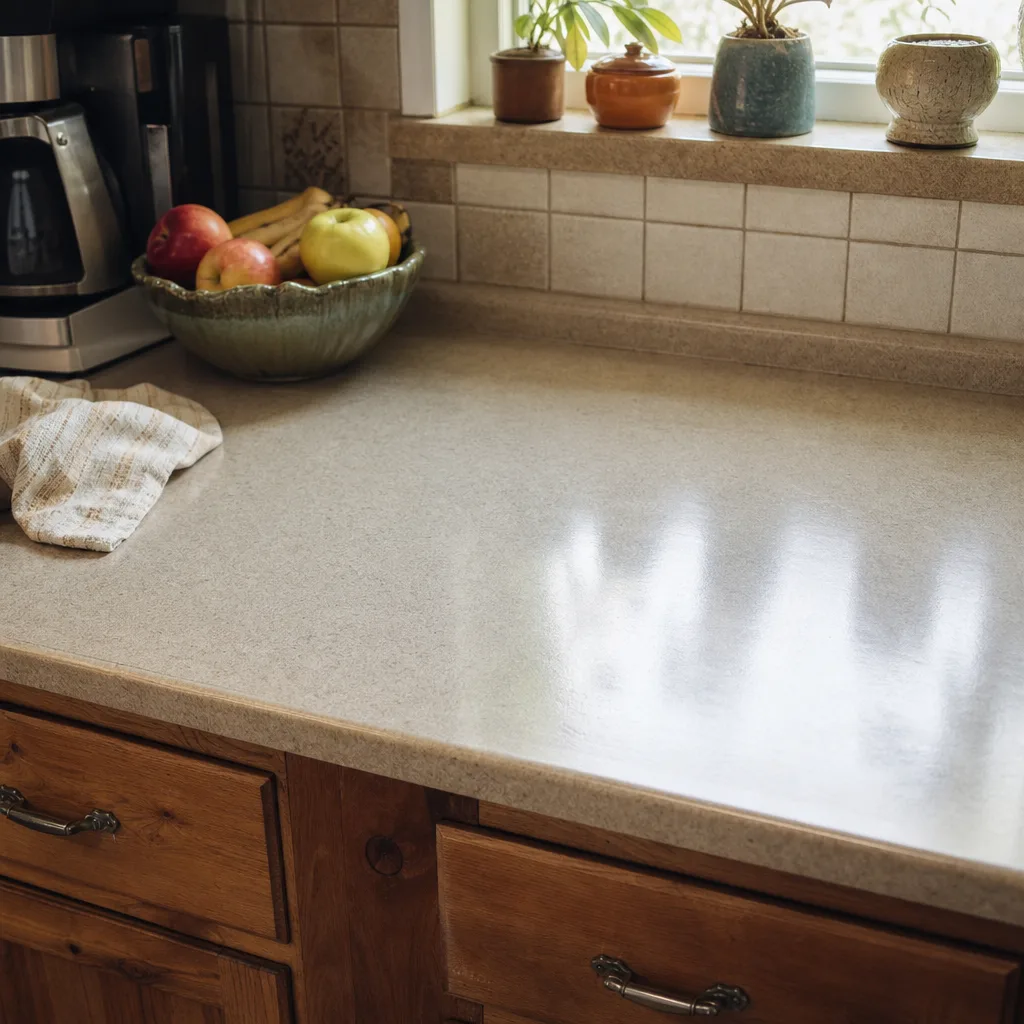
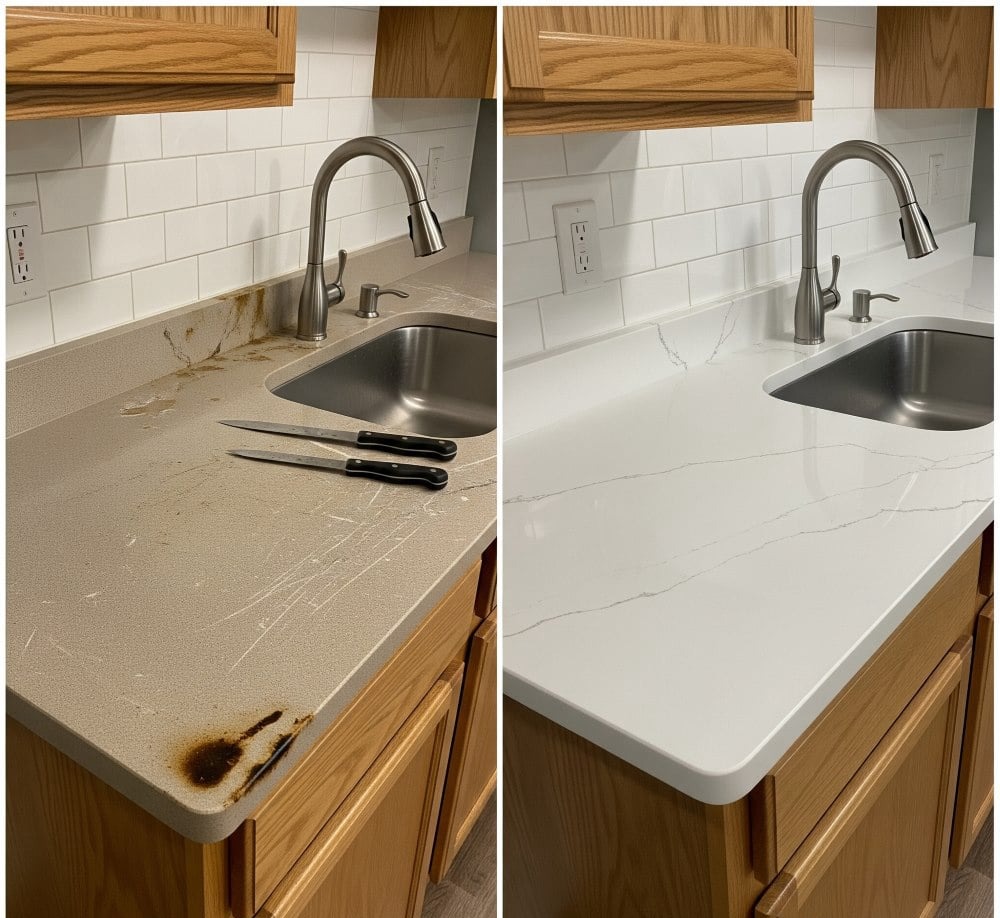
Repaired laminate countertop surface shown smooth and seamless after Milwaukie repair work

Common Countertop Damage That Can Be Repaired

Most countertop damage looks worse than it is. A chip right at the edge of the sink or a dark ring by the stove can catch your eye every time you walk into the kitchen. That doesn't mean the counter is done. If the damage is in one place and the counter is solid underneath, it's very often something that can be fixed.

These are the problems that usually fall on the repair side of the line:

  • Chips: These are small pieces knocked out of the surface or the front edge, often from a dropped pan or a bumped can. Edges and corners take the most hits, so that's where chips tend to show up.
  • Hairline cracks: These are thin cracks that stay on the surface and don't go all the way through the counter. If the counter doesn't move or flex when you press near the crack, it's usually a surface problem.
  • Burn marks: A hot pot set down for a few seconds can leave a scorch mark or a dull spot, especially on laminate. When the mark sits in one spot, it can often be repaired.
  • Lifted edges and seams: Laminate edge strips and seams can start to peel or bubble up a little over time. If the board under them is still firm and dry, these can often be laid back down and made smooth again.
  • Gouges and deep scratches: A knife slip or a sharp corner dragged across the top can leave a groove you can feel with your fingernail. One or two of these are a good fit for a repair.
  • Set-in stains: Some stains won't come up no matter how carefully you clean, like a ring from a rusty can or a spot where dye soaked in. A small stain like that is often fixable.

The thing all of these have in common is size. Each one sits in a small area on a counter that's otherwise in decent shape. That's why a repair makes sense here. You're fixing the part that bothers you and keeping everything else that still works.

Location matters too. Damage near the sink deserves a closer look. Before you decide it's only a chip, check whether the counter around it feels soft or looks raised. Water can sneak in through a chip or an open seam. If you catch it while the base is still dry and firm, the repair is simple. If you wait, it can turn into the bigger problem we covered earlier.

Tile counters can chip too. A cracked or chipped tile is its own kind of job. If the tile itself looks worn or dated, our Tile Refinishing service covers that.

Here's why this is worth knowing before you pick up the phone. When you see a damaged counter, it's easy to jump straight to the most expensive fix. A lot of homeowners start pricing a full kitchen remodel in Portland because of one chip near the sink. Sometimes a remodel really is the right call, especially if you want a new layout. But if your problem is on this list and the counter is solid, you may be able to skip the cost, the mess, and the weeks without a working kitchen.

If you're not sure whether your damage is small enough, that's exactly what the free estimate is for. We'll look at the spot and the counter around it and give you a straight answer. Our 100% Satisfaction Guarantee is there so you can feel good about whatever you decide.

That same focus carries through the practical kitchen remodeler Portland guidance our team provides to local families.

Learn more about our main Kitchen Refinishing service page.

Signs the Damage Has Gone Beyond Repair

A chip on the surface is easy to see. The trouble is what you can't see. Sometimes that ugly spot by the sink is only the first sign of a problem underneath, and fixing the top won't solve it. Before you call anyone, take five minutes and a flashlight and check a few things yourself.

  • Look under the sink. Open the cabinet and shine a light at the underside of the counter. Dark stains, a board that looks puffy or crumbly, or a musty smell all point to water that's been getting in for a while.
  • Press along the edges. Push down gently around the sink, the dishwasher, and the front edge. Solid counters don't give. If any spot feels spongy or dips under your hand, the base is weak there.
  • Check the backsplash line. A gap between the counter and the wall, or between the counter and the cabinets, that's getting wider over time means something is shifting.
  • Tap your tiles. On a tile counter, a hollow sound, a tile that wiggles, or a crack that runs across several tiles in a line usually means the surface under the tile is moving.
  • Watch the seams. A laminate seam that keeps opening back up after it's been closed, or a bubble that spreads across the middle of the top instead of staying at one edge, is often a moisture problem, not just a surface one.

Here's how it often plays out. You notice a chip near the faucet and figure it's a quick fix. Then you press next to it and it feels a little soft. You open the cabinet and see that the board underneath has swollen and darkened. That chip wasn't the problem. It was the warning sign.

If the faucet or drain is still dripping, get that fixed by a plumber first. Any repair placed over a wet base will fail, no matter how well it's done. The same goes for mold under the counter. The moisture causing it needs to be stopped before anyone works on the surface.

Sometimes the counter is solid, but the damage is spread across so much of the top that patching spot after spot just doesn't make sense. That's when refinishing, which we covered earlier, is the better fit.

None of these signs mean you did anything wrong. Kitchens get wet, and counters wear out. But it's better to find out now than to pay for a repair that lets you down in a few months. We'd rather tell you straight that a repair isn't the right call than sell you one that won't hold.

If you went through these checks and still aren't sure what you're looking at, our free estimate is the easy next step. We'll check the surface and what's under it, then tell you plainly whether a repair will last. Whatever we do for you is backed by our 100% Satisfaction Guarantee.

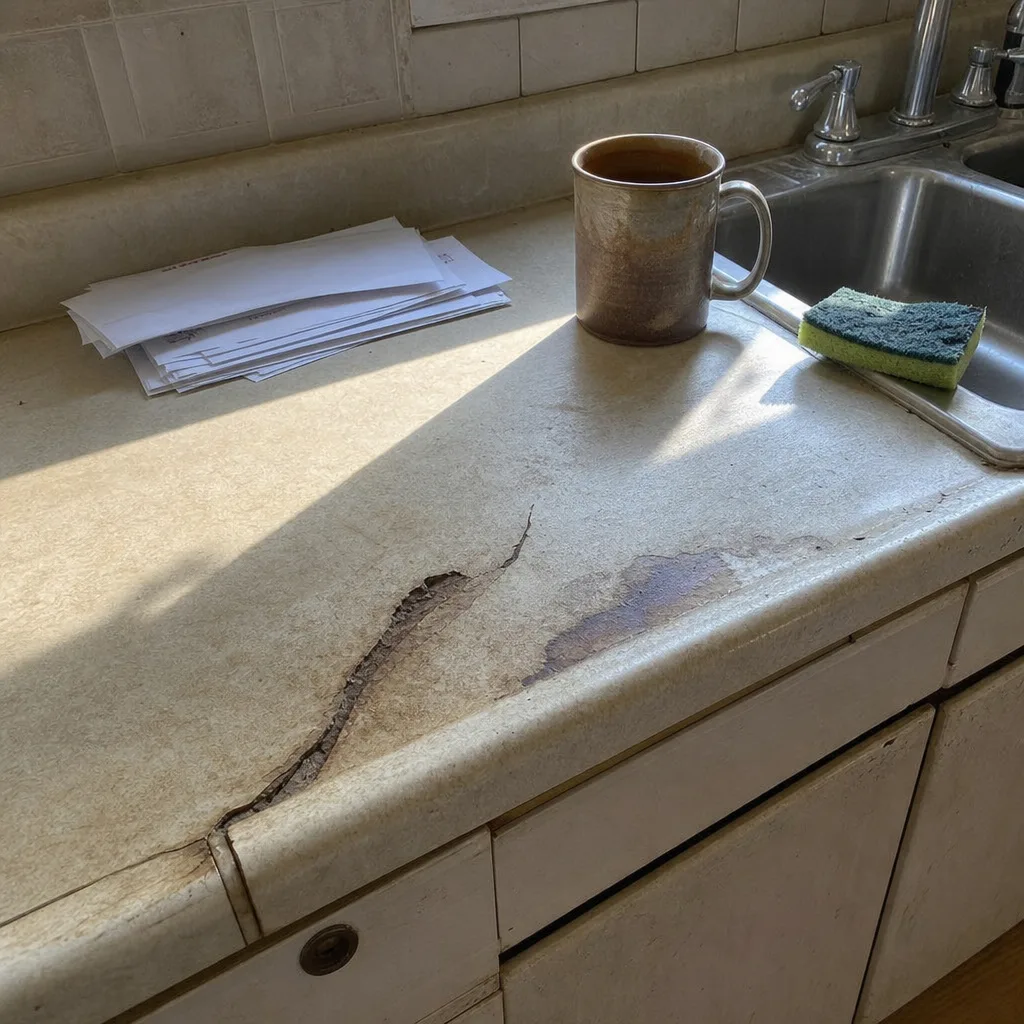
Homeowner view of damaged countertop with gouge and water stain in Milwaukie kitchen

What to Expect From a Countertop Repair Estimate

By now you've probably got a good idea which bucket your counter falls into. The last step is finding out what the fix will take. A good estimate isn't a sales pitch. It's a clear answer about what's wrong, what will fix it, and what it'll cost, so you can decide without any guessing.

Countertop repair isn't priced by the square foot the way a new countertop is. It mostly comes down to how much work the damage needs. These are the things that usually move the cost up or down:

  • How many spots need work. One chip is a smaller job than five chips, a burn mark, and a lifted seam.
  • How big and deep the damage is. A shallow surface chip takes less filling and shaping than a deep gouge or a broken corner.
  • What the counter is made of. Laminate, tile, and cultured marble each take a different kind of repair.
  • How hard the color is to match. A plain white top is easier to blend than a speckled or patterned one.
  • Where the damage sits. Spots on a front edge, a corner, or right next to the sink can take more care than a flat spot in the middle.
  • Whether something else has to be fixed first. If a leak needs a plumber before the surface work can start, that's a separate step and a separate cost.

You can make the estimate quicker and more useful with a little prep. Clear off the area around the damage so it's easy to see. Think back on when you first noticed the problem and whether it's gotten bigger. If you did the checks from the section above and found anything odd, like a soft spot or a stain under the sink, mention it right away. Those details help turn a rough guess into a real answer.

Whoever you talk to, these questions are worth asking before you say yes:

  • Is this really a repair job, or would refinishing make more sense for my counter?
  • How closely will the repaired spot match the rest of the surface?
  • How long will it be before I can use my counter again?
  • Is there anything under the surface that needs to be handled first?
  • What happens if I'm not happy with the result?

That last question matters most. A repair should leave you with a counter you stop noticing, not a patch you stare at every morning. That's why every job we do is backed by our 100% Zero-Risk Satisfaction Guarantee. If you aren't happy, we'll make it right.

It also helps to know who's coming into your home. Every one of our technicians is drug-free and background-checked, and we've been doing this kind of work around Portland since 1994. Our estimate is free, so there's no cost to finding out whether a simple repair can save you from replacing a counter that still has plenty of life left in it.

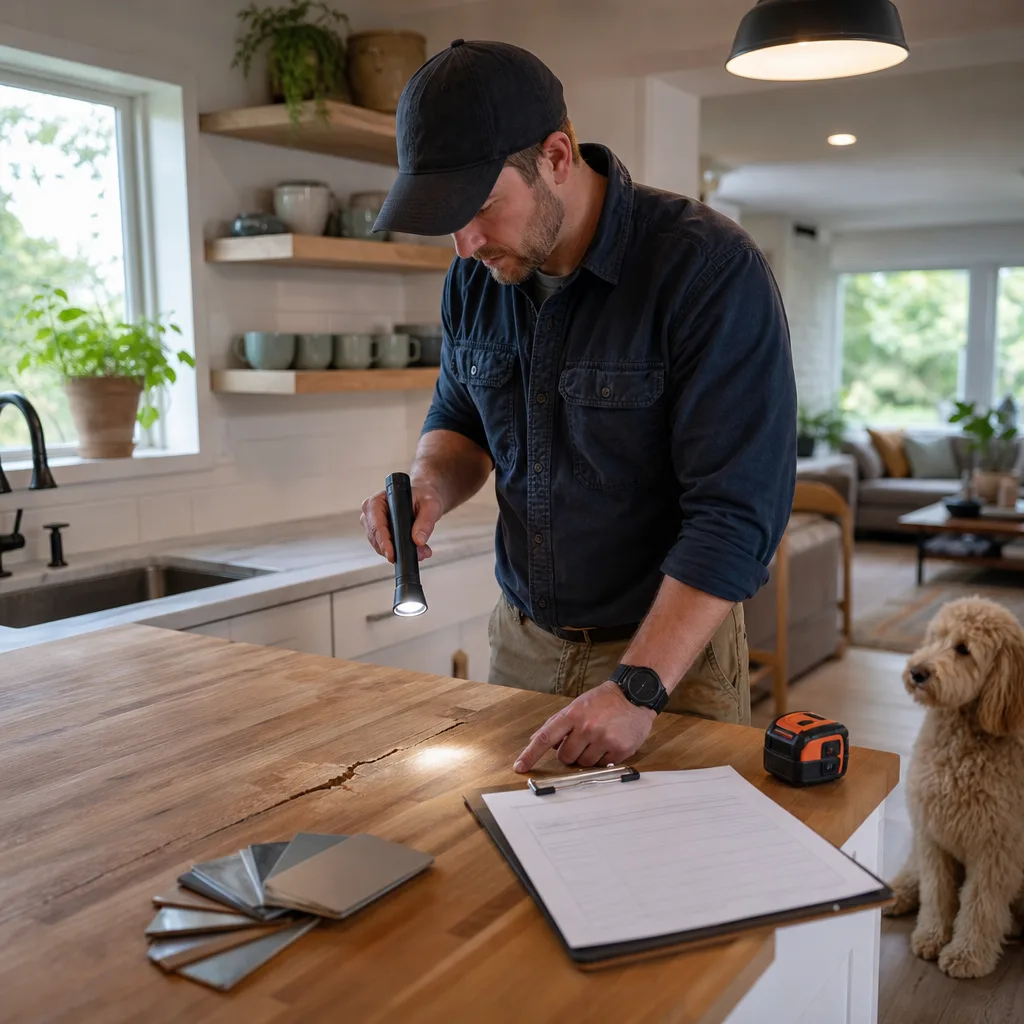
Technician inspects cracked butcher block countertop while preparing a repair estimate in Milwaukie

Why a Repair Can Be a Safer Bet Than a Full Replacement

When a counter has a chip that bugs you every day, replacing the whole thing can feel like the clean, final answer. It's natural to think a brand-new top is the safe choice. But a new counter is a bigger job than most people expect, and bigger jobs come with more chances for things to go sideways.

A countertop doesn't sit on its own. It's attached to your cabinets, it holds your sink and faucet, and it usually meets a backsplash along the wall. Taking it out means pulling apart everything that touches it. That's where the surprises tend to hide.

  • Backsplash tile can crack or pop loose when the old counter comes off, and matching old tile isn't always possible.
  • Cabinets that held up fine under the old top can turn out to be out of level, which has to be fixed before a new one can go on.
  • The sink and faucet have to be disconnected and hooked back up, which often means a plumber on top of the countertop crew.
  • Paint and drywall along the wall line can get scuffed or torn and need touching up afterward.
  • A new top usually has to be measured, made, and then installed, so you may wait days or weeks with a kitchen you can't fully use.

None of these are rare or strange. They're just part of what replacement can involve. Each one adds cost and time, and a lot of them don't show up in the first quote because nobody can see them until the old counter is gone.

A repair works the other way. We focus on the spot that's damaged and leave everything else alone. Your cabinets stay put, your sink stays hooked up, and your backsplash isn't touched. There's no waiting on a new top to be made and no long stretch of eating takeout because the kitchen is torn apart. You still get your counter back looking clean and even. You just skip the part where a small problem turns into a big project.

Think about it this way. Say you've got a sturdy laminate counter with one burn mark by the stove. Replacing it means paying for the new material, the install, the plumbing, and whatever the old top was hiding. Repairing it means fixing one spot. If the counter underneath is solid, you get the same result where it matters, a counter you stop noticing, for a lot less money and disruption.

There's also some peace of mind in keeping what already works. Your counter has been holding up your dishes and your morning coffee for years. If the base is sound, it's earned the chance to keep going. A good repair respects that instead of throwing out a perfectly good counter over one bad spot.

This isn't us saying replacement is never right. When the base is failing or you want a new layout, it's the honest call, and we'll tell you so. But when the damage is small and the counter is solid, a repair is often the lower-risk path. Our free estimate will tell you which one fits your counter, and our 100% Satisfaction Guarantee means you aren't taking a gamble either way.

Our Countertop Repair Process

Our countertop repair process is as detailed as they come. Our goal is to fix the damaged spot so it blends in with the rest of your countertop and lasts for years. We repair only what needs it and leave everything else alone, so you get the most for your money and the most enjoyment from this experience.

1

Assessment:

The first step is to assess the damage and the countertop around it. Each chip, crack, burn mark, gouge, or lifted edge is identified. We also check that the base underneath is dry and firm, because a repair placed over a soft or wet base will not last.
2

Cleaning the Repair Area:

The damaged spot and the area around it are thoroughly cleaned to remove soap, oil, food, old caulk, mineral deposits, and any other contaminants. This step ensures the repair materials bond properly to the countertop.
3

Preparing the Damage:

We scrape and sand the rough edges of the chip, crack, or gouge to give the repair materials a clean, slightly rough surface to grip. Without this step, the repair can loosen or pop out in days, weeks, or months and will need to be done again.
4

Masking and Protecting:

The areas around the repair, such as the sink, fixtures, backsplash, and the rest of the countertop, are carefully masked off and protected. The more time and attention given to this step, the better the repair will look and the less cleanup there will be after.
5

Ventilation and Safety Precautions:

Proper ventilation is set up to ensure any fumes from the repair materials are safely extracted. Safety equipment, such as masks and protective clothing, will be worn by your professional Renew-It refinishing technician.
6

Filling the Damage:

The chip, crack, or gouge is filled with a bonding filler made for your countertop material. Deeper damage is built up in layers so the fill stays solid. Lifted laminate edges and seams are laid back down and secured.
7

Sanding and Shaping:

Once the filler has set, it is carefully sanded and shaped until it sits level with the surface around it. Edges and corners are rebuilt to their original shape. You should not be able to feel a dip or a ridge when you run your fingertip across the spot.
8

Color Matching and Blending:

We custom match the color and texture of your countertop, including flakes or specks on patterned tops, and apply it over the repair. The color is blended into the surrounding surface and sealed with a clear topcoat so the repaired spot does not stand out from the rest of the counter.
9

Final Inspection and Cleanup:

Once the repair is finished, a final inspection is conducted, and any imperfections or areas that require touch-ups are addressed. The protective masking is carefully removed, and the kitchen is left in a clean and tidy condition. We will invite you into the room to inspect the repair. At this point we will explain how to take care of your repaired countertop, explain your guarantee, handle payment details, and ask you to leave us a review online to help others make a wise choice when choosing their countertop repair company in Portland, OR and Vancouver, WA.
10

Curing Time:

After the repair is complete, the repaired spot needs time to cure. The curing time can vary but is typically around 24-48 hours. During this period, keep the repaired area dry and do not set anything on it. The rest of your countertop can be used as normal.

Frequently Asked Questions

Common questions about Kitchen Countertop Repair

A countertop repair specialist with experience matching color and texture on solid surface material can handle this, not a general handyman. Solid surface repairs need careful blending so the fixed spot does not stand out from the rest of the counter. We've worked on these materials around the Portland area since 1994, so we know how each one responds to filling and shaping.

Yes, if the crack is a hairline crack on the surface and the counter underneath is still solid and doesn't flex. Quartz is harder than laminate, so a crack that's just cosmetic can often be filled and blended. If the crack runs all the way through the slab or the counter moves when you press near it, that points to a bigger problem than a surface repair can fix.

Start with a gentle cleaner and a soft cloth, since light surface marks often lift right off without any repair work. If the nick is still visible after cleaning, or you can feel a dip with your fingertip, that's a sign it needs a real repair instead of a DIY fix. Small nicks on an otherwise solid counter are a good match for a professional spot repair rather than replacing the whole top.

Kitchen Countertop Repair That Saves You the Cost of Replacement

Call Renew-It Refinishing for a free estimate. We'll look at the surface and the base, tell you plainly whether a repair will last, and fix the damaged spot without tearing apart your kitchen. Every job is backed by our 100% Satisfaction Guarantee.